The invisible people behind 111 billion euros of EU-funded work.

The European Union pays for people, for hours worked. The Commission puts personnel costs at roughly two thirds of a research grant. Across its two flagship research programmes, that is at least 111 billion euros in staff time.
European rules require a signed record, a timesheet, for every hour. The EU agencies that pay confirmed that they never receive it. What reaches them is a total: months of work, by an organisation, on a project. Never the person. Never the full portfolio of the person.
A timesheet is checked, occasionally, one grant at a time. But no one adds a person up across their grants. Not the agency that pays, not the Commission, not the Court of Auditors. Nobody. No body.
The Union is now writing its next 2-trillion-euro budget on the same model. So I tested one sector, in Belgium: 758 organisations, their parallel grants, their employment footprint. The trail led to one line in the accounts where EU-funded work vanishes: Code 61, beside the rent and the electricity. No name, no rate, no hours. Billions in public money.
This investigation is the overview the Commission does not have on the one thing the Treaty obliges it to deliver: sound financial management.
Brussels’ transparency lobby faces the transparency test
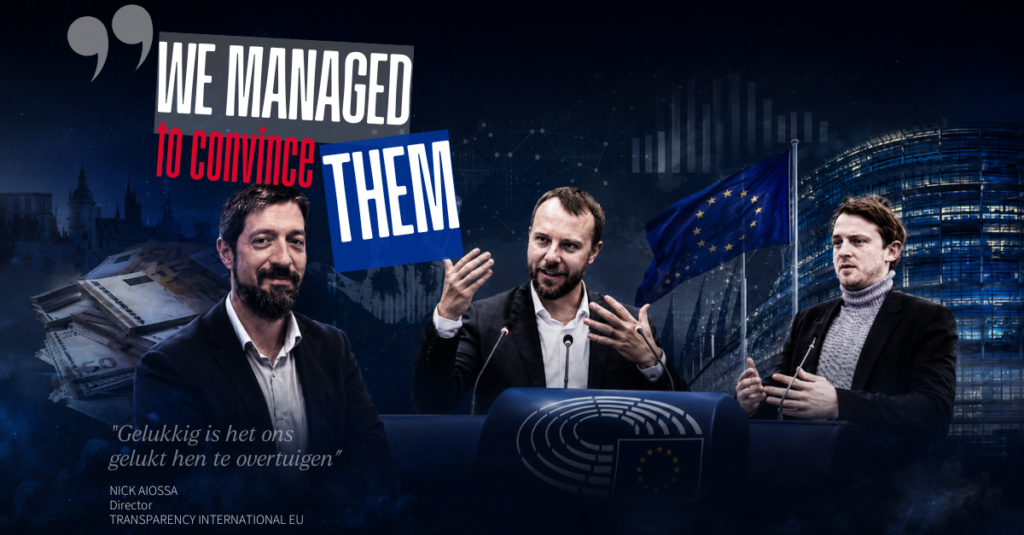
TI-EU branded Parliament’s NGO oversight group “illegitimate”. EU Money Monitor traced €7.29bn: invisible workforce, partial audits, removed OLAF tables and the unanswered question: who gets paid?
OLAF stopped publishing two fraud tables. Belgium was first in both.
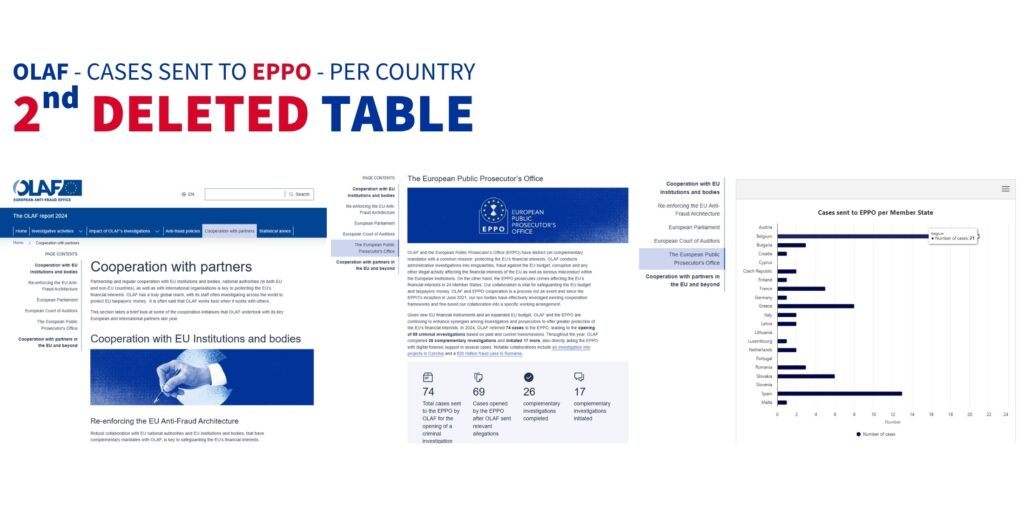
Every year, OLAF, the European Anti-Fraud Office, publishes a mandatory annual report. It goes to four EU institutions: Parliament, Council, Commission, Court of Auditors. It is supposed to show the public how OLAF is protecting their money.
Two tables were deleted from that report. Both showed Belgium at the top of fraud-related rankings. Neither removal was explained.
This is a pattern and it needs answers.
⚠ OLAF finally disclosed: 975 fraud signals about Belgium. It closed 6 cases.
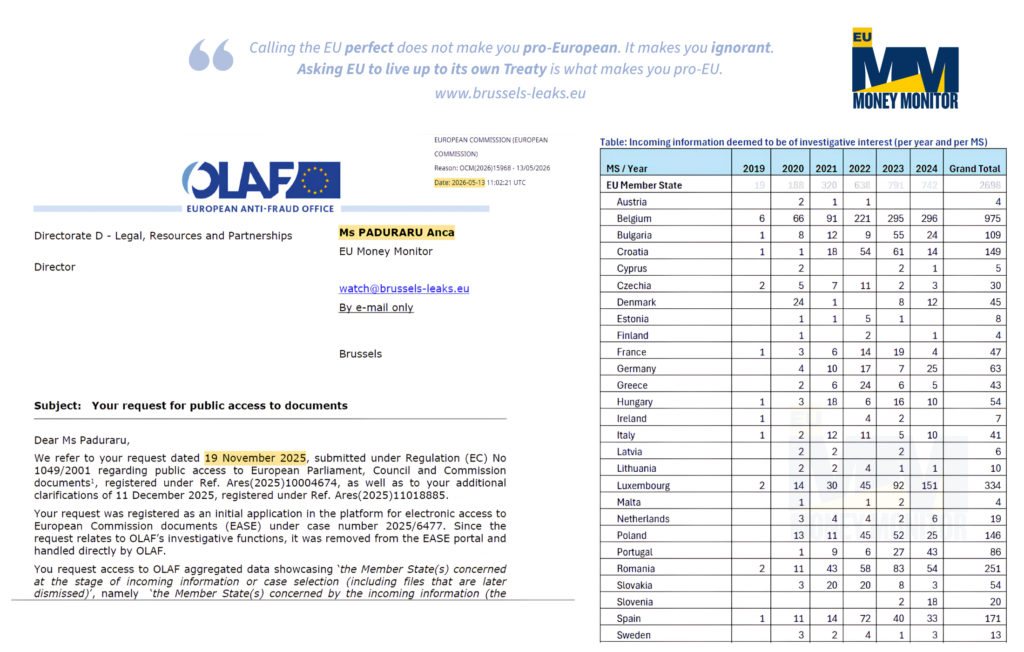
For one year I asked the European Anti-Fraud Office (OLAF) to explain the 4 closed cases in Belgium in a decade, compared to Romania’s 164. Or to Congo’s 7 and Uganda’s 6.
Yesterday evening, at 17:32, OLAF gave me the answer, the missing half of that picture. The table it deleted from the annual report in 2019 and said did not exist. The data the Commission’s own Secretariat-General overruled OLAF to produce. The numbers that sat in OLAF’s Case Management System while I filed challenges, waited six months, and sent formal submissions to Parliament and to OLAF’s own oversight body.
What is OLAF hiding? Two mandates and a Transparency HIT
In the 2018 annual report, OLAF still published a country-by-country table of incoming complaints from Member States (Figure 27 – page 57). Belgium: 18. Romania: 58. Spain: 32. Germany: 29. By the 2019 reporting year, that table was gone. The anti-fraud office still publishes concluded cases by country, but it stopped showing what came in. We asked OLAF for the country-level intake data for 2019–2024 and for the decision record behind its removal. OLAF refuses to answer since October 5, 2025.
Belgium received €31.2 billion in EU funding. OLAF closed four (4) cases in ten years.
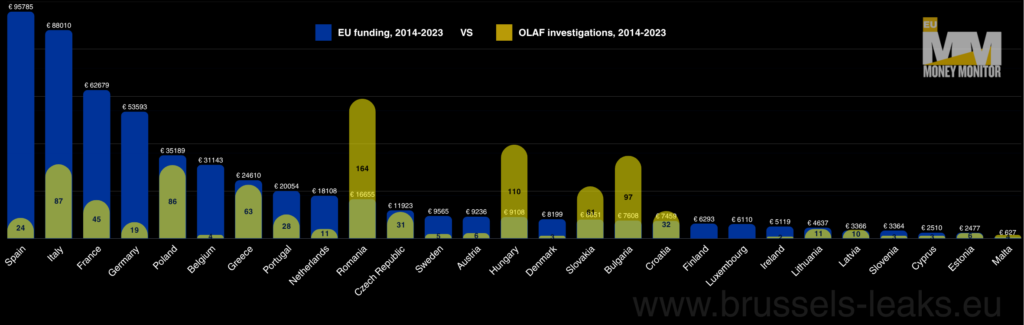
Belgium received €31.1 billion in direct-management EU funding over that decade. It hosts the European Commission, the European Parliament, the Council of the EU, and OLAF itself. It is the administrative centre of the union that funds it. And across ten years of anti-fraud activity, it generated fewer concluded OLAF investigations than the Democratic Republic of Congo, which generated seven, or Uganda, which generated six.