Belgium is not a side case.
Belgium is the centre of the model. Between 2014 and 2024, the Financial Transparency System recorded €7.888 billion in EU grant commitments to Belgian-registered NGOs and not-for-profit organisations, across 22.179 grant rows and 2.507 published beneficiary name strings. Belgium ranks second in the EU for NGO/NFPO funding. This is a major publicly funded ecosystem operating from the administrative heart of Europe. And like every publicly funded ecosystem, it runs on people.
The public can see the grants. It usually cannot see the real cost of the people running them, that is the problem.
Public money should fund expertise, it can fund highly paid expertise. The Belgium pilot identifies 298 entities with 0–4 registered employees managing €1.20 billion in EU grants. 285 of 758 verified entities (37.6%) have no financial filing in the NBB registry. Their revenue, costs, and payroll are not publicly accessible through any standard channel.
These numbers do not prove wrongdoing by any named organisation. They prove something more basic: for a substantial part of the Brussels NGO ecosystem, public systems do not show who delivered the work or at what cost, not even the expenditure as a total.
What I saw from the inside
I am a former Brussels-based NGO insider. I know what the internal workload picture looked like and what the EU’s picture looked like. They were not the same. Inside the organisation, team members were tracked across parallel EU-funded projects in detailed spreadsheets, more than 15 project columns. Individual totals in the monthly files sometimes overcome 180 hours in one month. The person-level picture existed internally.
No EU project officer ever saw that full monthly total as one total.
What the EU sees instead
Each project officer managed one grant, each file was reviewed in its own programme logic, each cost declaration sat in its own project architecture. The EU’s picture of any individual was a fragment: one project, one beneficiary, one reporting period, one cost line. The full picture existed only inside the organisation.
I later tested that directly. I submitted a data-access request asking an EU executive agency what it held on me in connection with projects I had worked on. The reply from CINEA was revealing. Under H2020 and Horizon Europe, it said, the use of resources regarding direct personnel costs is reported as person-months per work package by beneficiary. In the projects checked, CINEA said it had received no reported working-time, effort or hours data that could identify me personally. In plain terms: the internal picture may be person-level, but the agency’s picture is aggregate and task or project-based.
What the Belgium dataset proves
758 verified entities, €7.289 billion, four official registries cross-referenced for the first time.
That is why I built the NGO Transparency Dashboard, the Belgium NGO Funding Intelligence Pack, and the 10 Blind Spots report.
251 entities held 10 or more simultaneous EU grants in a single year, managing €5.48 billion, 75.1% of verified funding. No EU institution aggregates declared staff hours across an entity’s full concurrent portfolio. The hours that sometimes exceed 180 per month per person across parallel grants are visible only inside the organisation managing them.
298 entities with 0 to 4 registered employees manage €1.20 billion. Their workforces are real, full-time contractors who report daily, fill timesheets, and invoice monthly. They appear in no employer registry. Their rates and annual totals are invisible in any public record.
Only 123 of 758 entities, 16.2%, file complete accounts. 301 file simplified or micro accounts. Belgian law scales disclosure to entity size, not to public money managed.
An organisation running €100 million in EU grants across 70 parallel projects can file the same abbreviated account as a neighbourhood café, by keeping its registered headcount minimal and routing its workforce through service contracts. That is not a loophole, that is the system.
What EU oversight confirmed
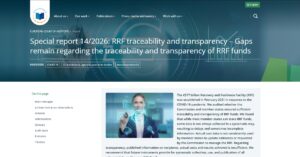
The European Court of Auditors called a reliable overview of EU NGO funding “practically impossible” in Special Report 11/2025, seven years after saying the same thing in 2018.
The European Commission conducted 45 HR audits on Belgian non-profit Horizon 2020 beneficiaries across eight years, correcting €1.2 million against €7.89 billion. The documented corrections represent 0.015% of the €7.89 billion universe.
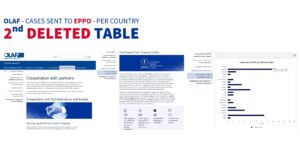
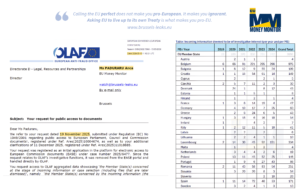
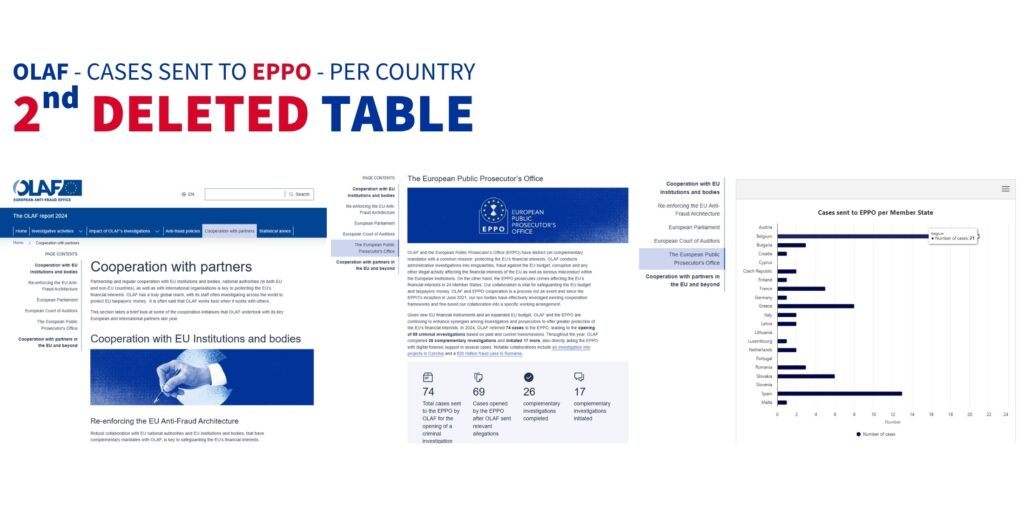
OLAF confirmed on 8 January 2026 that it cannot produce aggregate statistics on NGO HR-irregularity investigations because it does not classify cases that way. The EU’s anti-fraud office cannot quantify the risk pattern this article describes.
The EU reimburses labour as its largest grant cost item. It audited 0.015% of it. Its anti-fraud office has no picture of the sector-specific risk. Its Court of Auditors called the overview practically impossible.
I built it anyway, using only public portals. Both exist because no EU institution built them. Both will scale across the EU-27.
The point
The invoice is the hook, the missing workforce is the story.
Public money should fund expertise. It does. The question is whether the citizens funding it can trace how that expertise is paid, structured, and justified across the full portfolio of publicly funded work. In much of the Brussels NGO ecosystem, they cannot. The grant is visible, the workforce behind it is not.
That is not transparency. It is managed opacity, built into the accounting architecture, sustained by a project-based oversight system that sees fragments, and confirmed by an audit coverage rate of 0.015% across eight years.
Citizens fund it. Citizens should see it.